


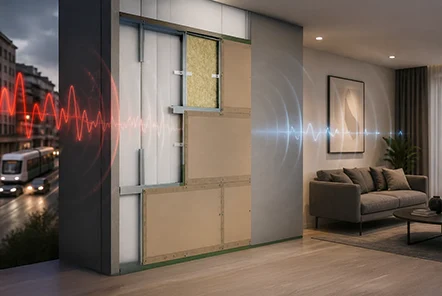
How to choose soundproofing materials: a practical guide without myths
What is the best material for soundproofing a wall or apartment?
Most people expect a single product that solves the problem. In reality, there is no “magic” soundproofing material.
Soundproofing always works as a system. Different materials perform different roles:
- some absorb sound
- some block it
- others reduce vibration
To choose the right solution, you need to understand how these layers work together.
What Materials Are Used in Soundproofing
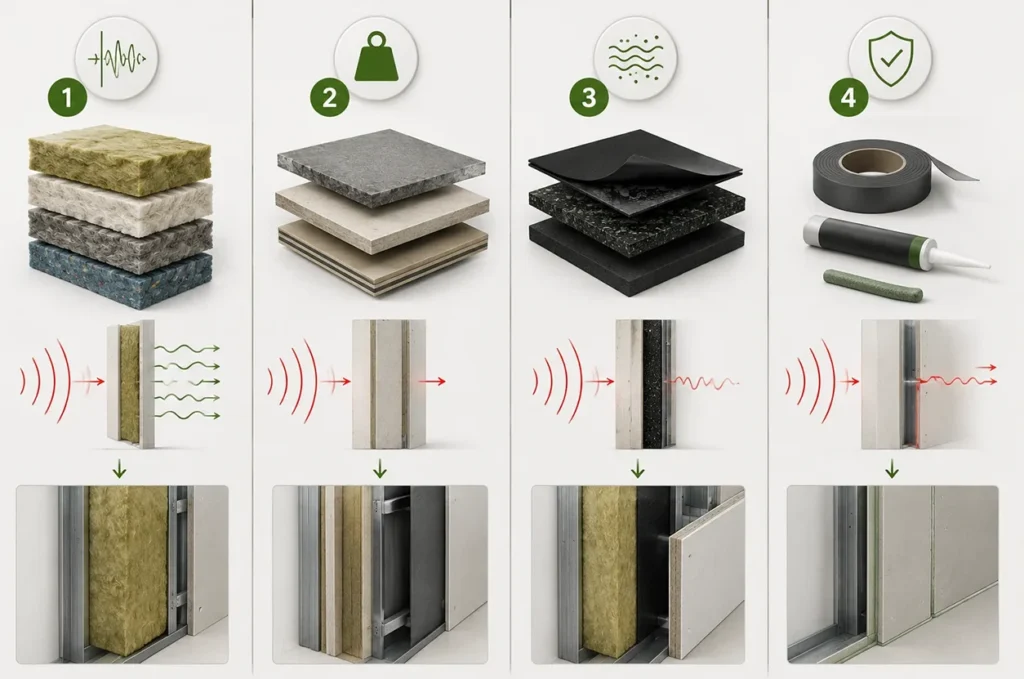
1. Absorptive Materials (Sound Absorption)
Purpose: reduce echo and internal resonance
Soft, fibrous materials such as:
- mineral wool
- fiberglass
- cellulose
- recycled textile fibers
These materials:
- absorb sound waves
- reduce reverberation
- improve acoustic comfort inside the structure
However:
They do not block sound between rooms
2. Mass Materials (Sound Blocking)
Purpose: prevent sound transmission
This includes:
- dense panels
- gypsum boards (drywall)
- multilayer constructions
The principle is simple:
The heavier and denser the system, the harder it is for sound waves to induce vibration in the structure.
In Sonotiz systems, this function is performed by:
- high-density panels such as SONOTIZ BLOCK
- multilayer wall, ceiling and floor assemblies
3. Damping Materials (Vibration Control)
Purpose: reduce structural vibration
When sound reaches a wall, the surface begins to vibrate and can act as a secondary sound source on the other side.
In simple terms:
The less the wall vibrates, the less sound it transmits.
Damping layers:
- dissipate vibration energy
- reduce resonance
- increase the effectiveness of the entire system
4. Sealing (Airtightness)
Purpose: eliminate sound leaks
Even a small gap can significantly reduce soundproofing performance.
A simple analogy:
If you build a perfectly waterproof bathroom but leave a small gap, water will still find a way through. Sound behaves the same way.
Critical weak points include:
- electrical outlets
- pipes and service penetrations
- ventilation openings
- wall-to-floor and wall-to-ceiling joints
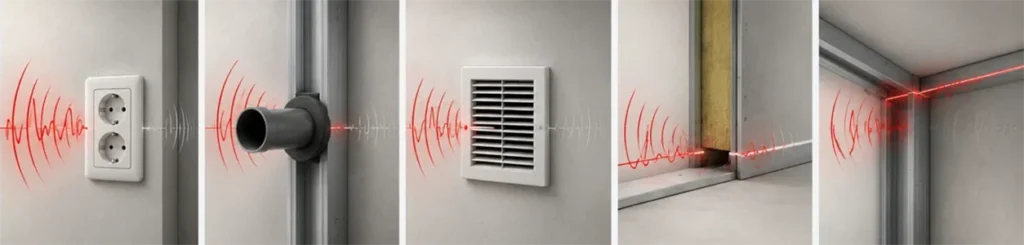
These are known as acoustic bridges or flanking paths.
Why One Material Does Not Work
One of the most common mistakes is expecting a single product to solve the problem.
For example:
- acoustic foam reduces echo but does not block sound
- a dense panel without sealing gives limited results
- insulation without mass does not protect against neighbour noise
Is There a “Universal” Soundproofing Material?
Many people are looking for a “soundproofing miracle solution”.
In practice, some materials combine several properties.
For example, SONOTIZ AT is a high-density acoustic and thermal mat made from pressed E-glass fibers with a protective polymer layer.
It combines:
- surface density (mass)
- elasticity (vibration control)
- multilayer structure
This allows it to reduce both airborne and impact noise while also improving thermal performance.
However, even such materials:
Deliver the best results only when used as part of a complete soundproofing system.
How an Effective Soundproofing System Works
Real soundproofing performance comes from combining layers:
- Absorption – inside the structure
- Mass – to block sound
- Damping – to reduce vibration
- Sealing – to eliminate leaks
This system-based approach is the foundation of Sonotiz solutions.
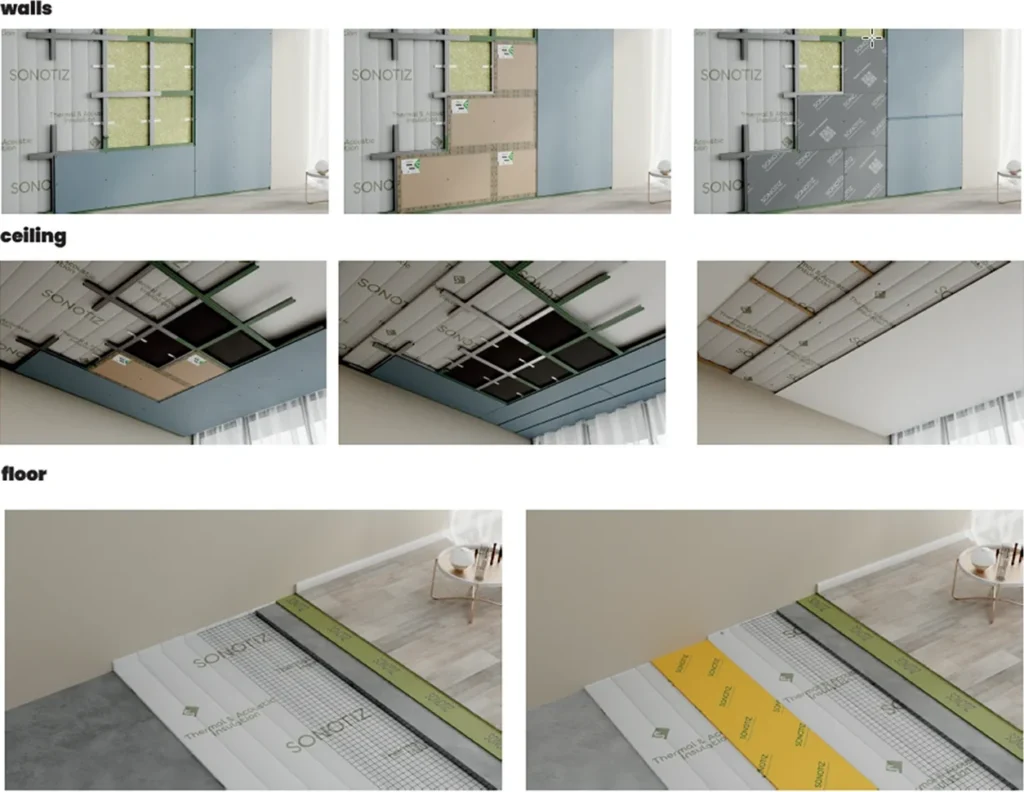
Which Sonotiz Systems to Choose
Depending on the project, different system levels are used.
For walls:
- SonoFrame Essential – basic sound insulation
- SonoFrame Advanced – for apartments and offices
- SonoFrame Pro – for higher acoustic requirements
For limited space:
- SonoSlim Essential / Advanced – compact solutions
Complementary materials:
- vibration isolation tapes
- mounting elements
- acoustic adhesives
- installation accessories
All components are designed to work together as a system - not as separate products.
How to Choose the Right Solution
Ask yourself three key questions:
1.
What type of noise do you have?
- voices, music → airborne noise
- footsteps, vibration → structure-borne noise
2.
Is it renovation or new construction?
- new builds allow full system integration
- renovations often require compact solutions
3.
Are there thickness limitations?
- thinner systems save space
- multilayer systems provide higher performance
Faq
1. What is the best material for soundproofing?
2. What is better: mineral wool or dense panels?
They serve different functions:
– mineral wool absorbs sound
– dense panels block sound
The best result comes from combining both.
3. Can I soundproof a wall with just one layer?
4. What is the best all-in-one soundproofing material?
5. Why can I still hear neighbours through a thick wall?
Sound often travels through:
– outlets
– ceilings and floors
– joints and connections
This is called flanking transmission.
Sooo….
Soundproofing is not about choosing a material - it is about designing a system.
The best results are achieved when:
- each layer has a clear function
- the structure is correctly assembled
- all weak points are properly sealed
That is why professional soundproofing solutions are always built as systems — not as individual materials.
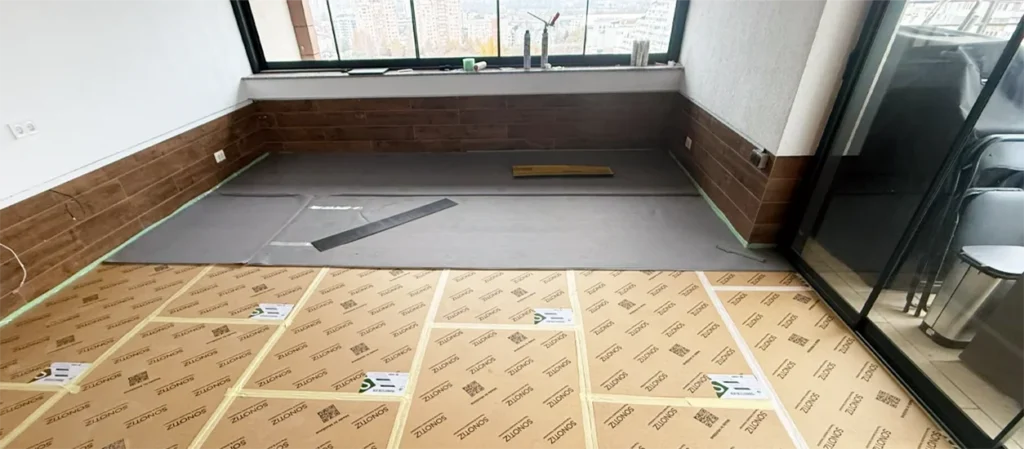
Need Help Choosing the Right System?
Our specialists are here to guide you — whether you’re planning for a new build, renovation, or technical installation. We’ll help select the best acoustic system for your facility and budget.